THE LOCAL PLANT SHOP / INSTALLATIONS
Designed into
the space.
Rooted in nature.
Biophilic design. Living walls. Considered plant installations.
Our biophilic approach connects people with nature through thoughtful plant design. For homes, workplaces and hospitality spaces, we consider greenery alongside materials, light, proportions and the way a space is used—from the first conversation to the practical details.
Discuss your space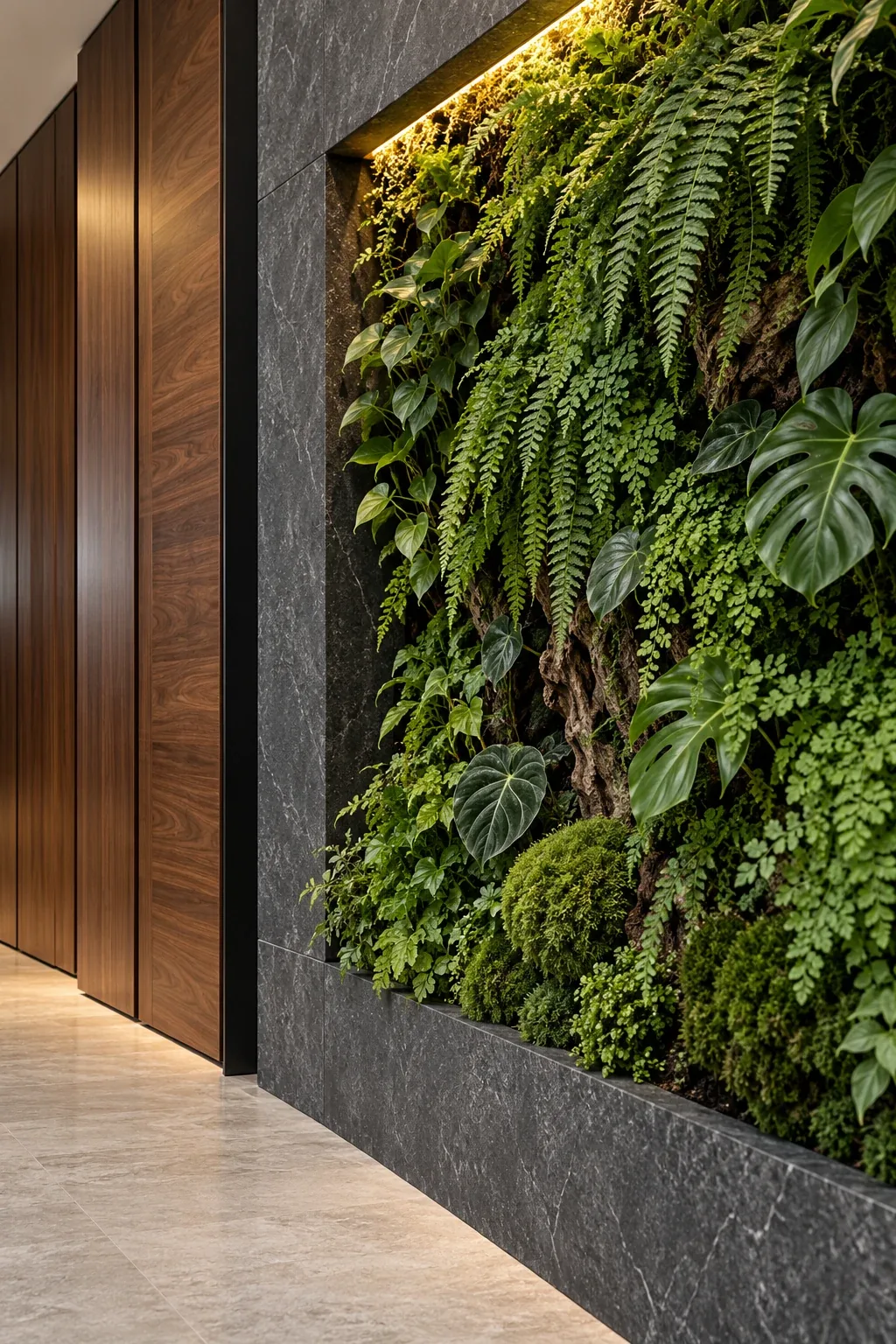 BOTANICAL MATERIAL / ARCHITECTURAL DETAIL
01 / LIVING WALLS
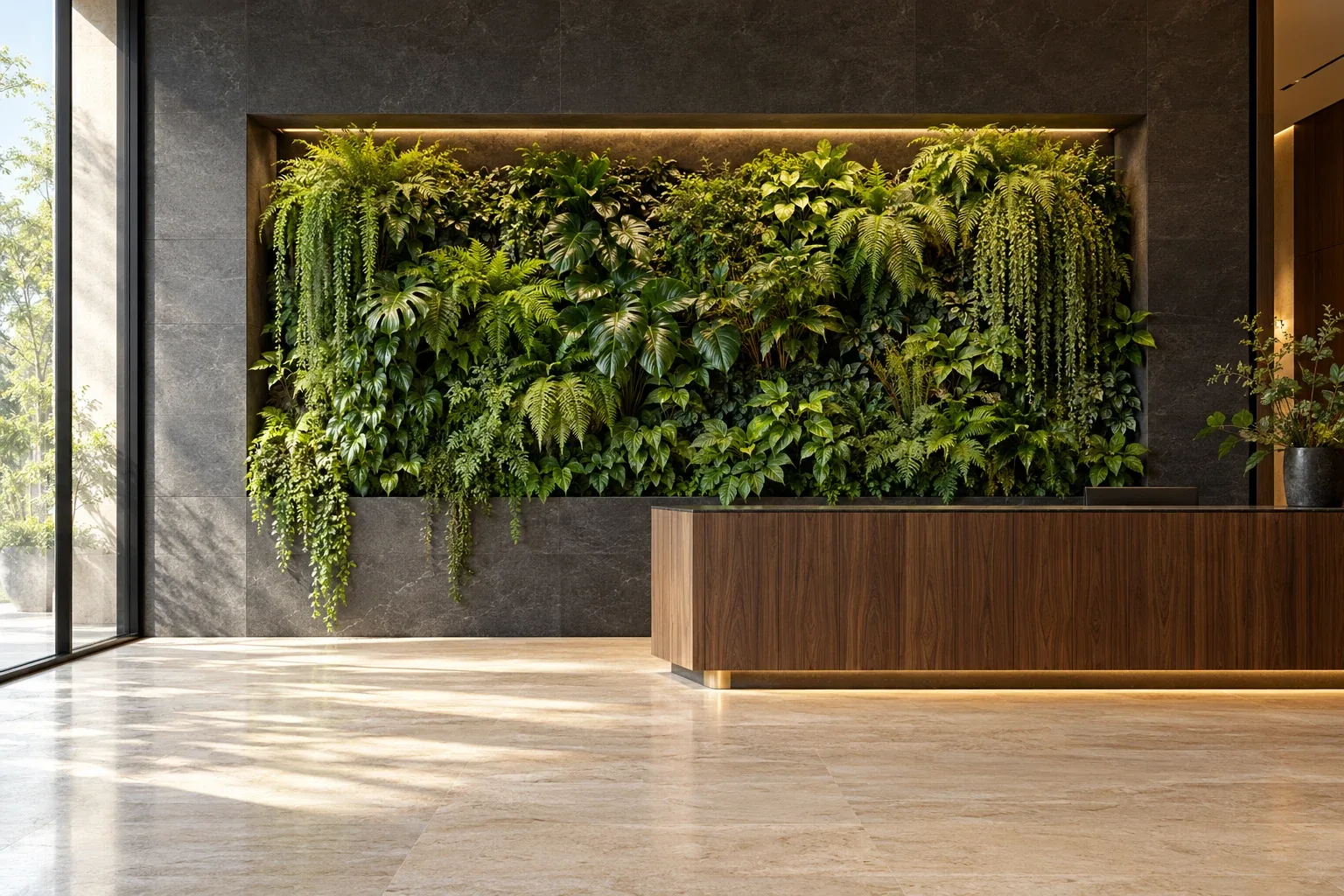
A living surface.
A spatial statement.
Greenery becomes part of the room’s structure. A planted wall can define a gathering area, draw the eye through an atrium, or bring texture to an otherwise quiet surface.
- Design focus
- Proportion, planting rhythm, depth and the relationship to surrounding materials.
- Planning considerations
- Available light, water, drainage and access for ongoing care.
02 / PRESERVED MOSS
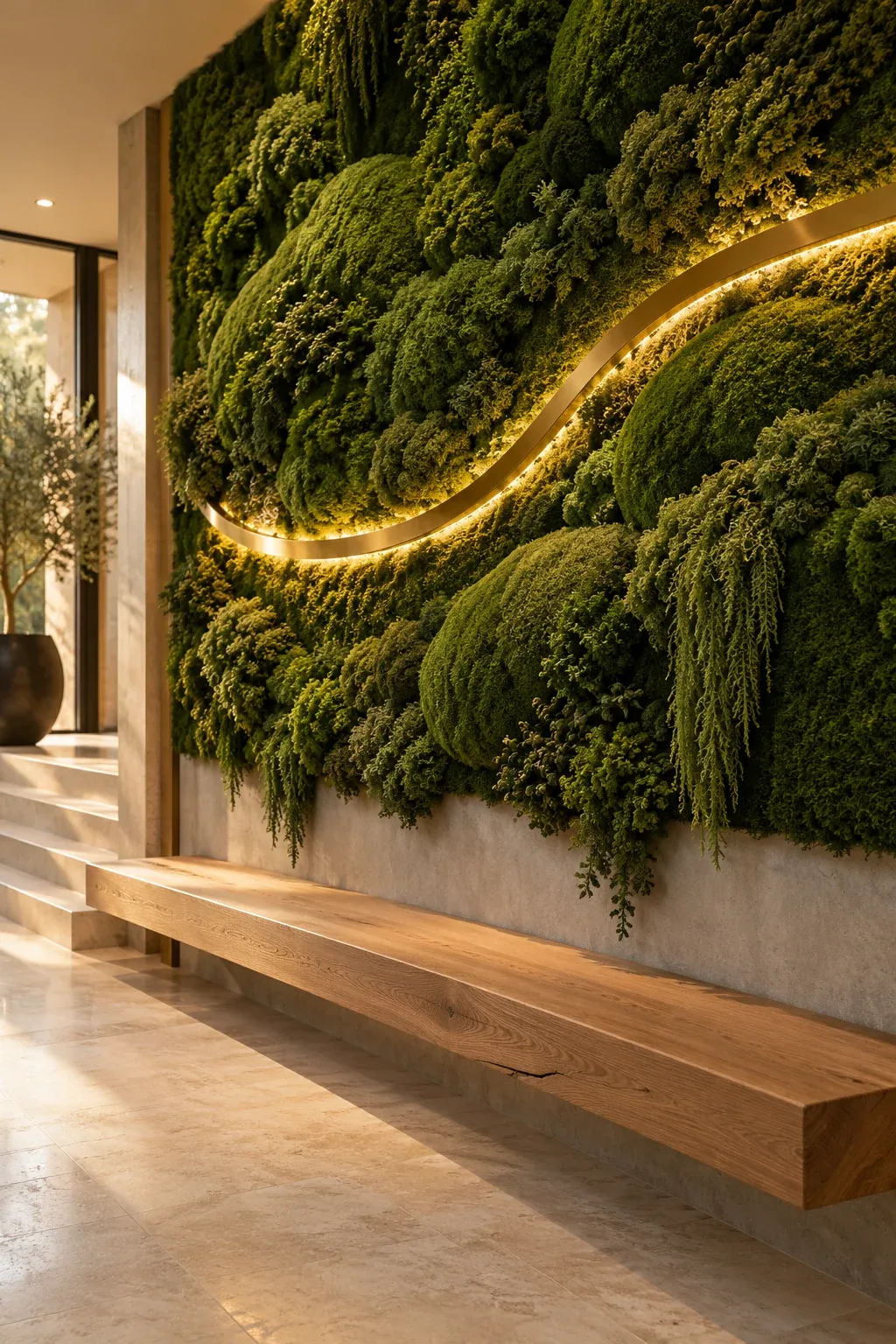
Texture that
changes the room.
A tactile botanical composition shaped around the architecture. Preserved moss brings depth and organic variation to recessed panels, feature walls and sculptural surfaces.
- Design focus
- Texture, relief, restrained color and the way light moves across the surface.
- Planning considerations
- Location, indoor conditions, framing and the finish of adjoining materials.
03 / PLANT INTEGRATION
One plant.
Or a whole
new perspective.
From a sculptural tree to a layered arrangement, planting is considered alongside vessels, furniture, circulation and light. The plant’s needs guide its placement; the space guides its expression.
Residential, commercial and hospitality spaces each ask different questions. Tell us how your space is used, what you’re drawn to, and where you’d like nature to have a presence.
Explore plant designOUR BIOPHILIC APPROACH
A closer connection
to nature.
Biophilic design explores how the built environment can connect us with nature. Our focus is on the botanical layer: living walls, sculptural planting and natural textures that respond to the architecture.
- Light & living form
- Choose plants and placement around available light, views and the way people move through a room.
- Materials & texture
- Bring foliage into conversation with wood, stone and vessels, using contrast and repetition to shape the space.
- Care & continuity
- Consider water, drainage and access early so the design supports the plants as well as the people using the space.
THE DESIGN CONVERSATION
From possibility
to a considered plan.
Read the space
Architecture, available light, the way people move, and the feeling you want to create.
Shape the direction
Plant forms, materials, scale and placement come together as a coherent botanical idea.
Resolve the details
Site conditions, access, installation requirements and care inform the next steps.
A FEW HELPFUL ANSWERS
Installation questions
How do you apply biophilic design to plant installations?
We consider plants alongside available light, views, materials and the way people use a space. Living walls, individual plants and natural textures form the botanical layer, with access and ongoing care considered from the start.
What types of spaces can you design plant installations for?
We consider plant installations for homes, workplaces and hospitality spaces. Each design responds to the architecture, how the space is used and the site conditions.
What should I consider before planning a living wall?
Available light, water, drainage and access for ongoing care are key planning considerations. Share photographs and details about the intended wall to begin the design conversation.
Can you help with individual plants and vessels?
Yes. Plant integration can range from a single sculptural tree to a layered arrangement. We consider plant needs, vessels, furniture, circulation and light together.
How does the installation design process begin?
We begin with your space, inspiration and timing. From there, we explore plant forms, materials and placement, then discuss site access, installation requirements and care.
YOUR SPACE / YOUR PROJECT
Let’s look at
the possibilities.
Share a few details about the property, your ideas and your timing.
Start your inquiry